
The Real State of the South-East Queensland Residential Property Market
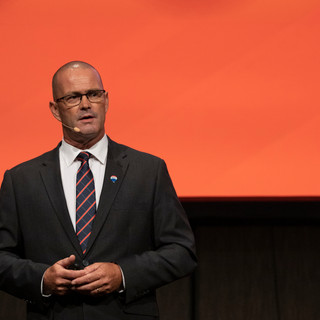
"The headlines may have changed, but the fundamentals haven't."

If you've been following the media recently, you could be forgiven for thinking the South-East Queensland property market has suddenly lost its shine.
After years of extraordinary growth, we're now seeing headlines about price declines, softer auction results, and buyers taking longer to make decisions. For some, that's enough to trigger concern.
But markets are rarely as simple as the headlines suggest.
The reality is that South-East Queensland's residential property market hasn't stopped - it has simply shifted gears.
From Frenzy to Function
For much of the past four to five years, buyers were competing fiercely for a limited number of homes. Multiple offers, unconditional contracts, and properties selling within days, sometimes hours became the norm.
That level of urgency was never going to last forever.
Today's market is more measured. Buyers are conducting due diligence, negotiating harder and taking more time before committing. Sellers, meanwhile, are beginning to experience that the exceptional price growth experienced over recent years cannot be automatically expected in every suburb or every property type.
This isn't a weak market.
It's a normal market.
Supply Still Drives Everything
The single biggest influence on South-East Queensland's property market remains supply.
Despite some increase in listings compared with the ultra-tight conditions of recent years, available housing stock is still well below what population growth demands. Construction costs remain elevated, labour shortages continue to impact new housing delivery, and planning constraints mean additional supply cannot be created overnight.
Put simply:
There are still more people wanting homes than there are homes available.
That imbalance continues to underpin values across much of the region.
Brisbane Is No Longer Carrying the Whole Story
One of the more interesting developments is that South-East Queensland is no longer simply "the Brisbane market."
Buyers are increasingly looking across the entire region.
Areas such as the Redlands, Moreton Bay, Logan, Ipswich, the Darling Downs, the Sunshine Coast and the Gold Coast continue attracting owner-occupiers and investors seeking lifestyle, affordability and infrastructure.
The ripple effect that began several years ago continues to spread, although individual suburbs are now performing quite differently from one another.
Micro-markets have become more important than ever.
Two homes only a few kilometres apart can experience very different levels of buyer demand depending on presentation, price positioning, school catchments, transport access and local amenities.
Buyers Have More Confidence
Ironically, a slower market often creates stronger buyers.
With less pressure to make instant decisions, purchasers are becoming more selective. Building inspections, finance clauses and negotiation are returning as normal parts of the buying process.
That's actually healthy.
A balanced market allows buyers to make informed decisions rather than emotional ones.
The fear of missing out (FOMO) has largely been replaced by careful consideration.
Sellers Must Adapt
For Sellers, success today requires a different approach.
Pricing strategy has become critical.
Overpricing in the hope that buyers will "meet the market" is proving increasingly ineffective.
Today's buyers are well informed. They have access to extensive online data, recent comparable sales and professional advice. If a property is priced beyond market expectations, they simply move on making the first 7-10 days of a Sellers marketing campaign somewhat critical.
The homes attracting the strongest competition tend to have three things in common:
Accurate pricing
Excellent presentation
Comprehensive marketing
Properties that tick all three boxes continue to generate multiple enquiries and competitive offers.
Those that don't often remain on the market longer while price expectations gradually adjust.
Interest Rates Are Becoming Less Dominant
For nearly two years, interest rates dominated every property conversation.
Today, buyers appear to have largely adjusted.
While higher borrowing costs continue to affect affordability, they are no longer creating the same uncertainty they once did. Many purchasers have accepted the current lending environment as the "new normal," allowing lifestyle, employment opportunities and family needs to regain prominence in purchasing decisions.
Population Growth Isn't Slowing
One factor that continues to support South-East Queensland is population growth.
Interstate migration remains positive, international migration has recovered strongly, and the region continues to attract people seeking employment opportunities, lifestyle benefits and comparatively better affordability than Sydney or Melbourne.
Looking further ahead, major infrastructure investment and preparations for the 2032 Olympic Games continue to reinforce long-term confidence throughout the region.
These aren't short-term influences.
They're structural drivers that are likely to shape the market for years to come.
Are Prices Falling?
The answer depends on where you look.
Some recent data shows modest price declines in Brisbane after an extended period of growth, while other parts of South-East Queensland have remained relatively resilient.
What's important is to keep these movements in perspective.
After almost unprecedented capital growth over recent years, a period of consolidation should not be viewed as a market collapse.
Rather, it represents a market finding a more sustainable pace.
Property markets have always moved in cycles.
The current cycle simply appears to be transitioning from rapid appreciation to a steady, fundamentals-based performance.
What Happens Next?
Predicting short-term property movements has always been difficult – often a dangerous venture that I’ll leave to the 'ego-driven' commentators.
However, the medium to longer-term fundamentals remain compelling.
South-East Queensland continues to experience:
Strong population growth
Limited housing supply
Significant infrastructure investment
Relative affordability compared with Australia's southern capitals
High lifestyle appeal
Ongoing employment growth
These are not conditions typically associated with prolonged property downturns.
Instead, they suggest a market likely to experience periods of moderation while continuing to benefit from long-term structural demand.
Final Thoughts
The South-East Queensland property market isn't booming like it did two years ago.
Nor is it collapsing as some headlines might suggest.
Instead, it has matured.
Buyers have more choice.
Sellers need better strategy.
Agents must provide better advice, more skill and stronger negotiation strategies.
And pricing has become more important than ever.
For those willing to understand the market rather than react to headlines, opportunities continue to exist on both sides of the transaction.
As always in real estate, the best decisions are rarely made by following the crowd - they're made by understanding the fundamentals.
Because while markets change, the principles of supply, demand and human behaviour remain remarkably consistent.



Comments